ISBN: N/A
Publisher: Dell Publishing Company
Year: 1967
Format: 84 Pages
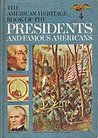
The American Heritage Book of the Presidents and Famous Americans (Volume 4)
Synopsis & Analytical Review Framework
Reader Critical Response Manifest
He was the first President to die in office. His Presidency lasted just over a total of 30 days, causing a constitutional crisis when it became clear that there wasn't a defined precedent in place as to the succession process. In this volume of the American Heritage series of books, William Henry Harrison leads off these succinct yet tight biographies of the group of Presidents who oversaw the quickly changing times of the country during the 1840s. Harrison was the last United States President to have been born a British citizen. Elected decades after his famous Tippecanoe victory over the Shawnee Nation, Harrison rode to office on the false advertisements proclaiming him to have been born in a log cabin, frontier-style. He was, in fact, the child of a wealthy Virginia family, his own father being one of the signers of the Declaration of Independence. Harrison didn't have much time to accomplish much during his short time in office. He died from pneumonia, caught during his inauguration ceremony. John Quincy Adams said he was "taken away thus providentially from the evil to come." Harrison was succeeded by John Tyler. Tyler was also born to a rich Virginian family. He was on the plantation when he received word that the President had died and no one was sure of what to do. Did Tyler, as the current Vice President, step into the White House to finish Harrison's term? Did he remain as VP? This was all new. Tyler took matters into his own hands and quickly made himself at home as the new leader of the United semi-United States. Unlike Harrison, Tyler was not a member of the reigning Whig Party but had been added to the ticket to balance out the vote. The Whigs got burnt. So did Tyler. A fierce constructionist, he had no real party of his own to back him. When Harrison's original term ended, so did Tyler's Presidency. Years later, he followed his belief in states' rights and became a secessionist during the Civil War. A Confederate. Needless to say, that act left him as one of the least liked Presidents of all time. Then the cavalry arrived. As always seems to happen in times of crisis, the Yanks pulled a rabbit out of their hats. The next President was James Knox Polk, who is still considered one of the best Presidents. Polk was years ahead of his time in that he came in with an agenda, specifically four clearly defined goals: 1. Re-establish the Independent Treasury (because he thought the people's money should be protected by law) 2. Reduce tariffs (because he felt the people - not the manufacturers - should choose their own goods from the greatest possible market) 3. Acquire the Oregon Territory (because the people wanted Manifest Destiny) 4. Add California and New Mexico to the Union (because he wanted the borders to be defined and safe) Polk said he would get it all done in four years...and he was right. He worked his butt off to the point that he had rapidly aged by the time his term was complete. He had the ability to foresee what was needed before it was needed (gold was discovered in California just before he left office). He refused to run for office again and died just two months after his Presidency ended (cholera). Polk was the only strong President between Jackson and Lincoln, his legacy ensured. The final elected President of the 1840s was Zachary Taylor, the hero of the Mexican-American War. Voted into office on the strength of his victories, "Old Rough-and-Ready" was yet another offspring of the aristocratic and wealthy Virginia planters. Taylor had few political friends, he was a military man first and foremost. His efforts to solve the coming battle between north and south ended in a stalemate, though he gave it his best. Despite his Southern upbringing, he wanted to hem in the slavocracy, but time ran out. Taylor became the second President to die in office. To this day, there remain conspiracy theories as to whether he was poisoned by pro-slavery Southerners. In 1991, his remains were exhumed for testing to find that he died of cholera (like Polk). "God knows I have endeavored to fulfill what I conceived to be an honest duty. But I have been mistaken. My motives have been misconstrued, and my feelings most grossly outraged." It was all downhill from there. Millard Fillmore (not to be confused with Alec Baldwin), as the Vice President, followed Taylor. Suffice to say, he was a weak President though he was a selfless public servant. He tried to accomplish much, but He is counted among the mediocre because of what he did not and could not do. Not everyone can be a Polk or a Lincoln. As with each volume of the series, this book is short but it's enough to present strong biographies not only of the described Presidents but also of other historical figures of that period. I really enjoyed it. Easy to read, I wish I had known about these before I had to take my citizenship test. For while I can list every single English King and Queen since William I, the American Presidents have always confused me. For anyone else like me, this is a great book to gather info. Book Season = Year Round (know thy land)