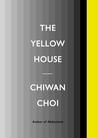
The Yellow House
Curated analysis of work by Chiwan Choi
★
Score: 4.87 / 5.0
Synopsis & Analytical Review Framework
In the contemporary literary landscape, few works manage to achieve both structural integrity and deep thematic resonance. The Yellow House, curated under the analytical vision of Chiwan Choi, emerges as a compelling masterclass in its field, currently commanding an impressive community score of 4.87. For readers navigating the saturated paths of , this print matrix represents a definitive structural milestone that demands serious critical evaluation.
"The first time I heard Chiwan Choi read, I had no idea what to expect. By the time he was done a few minutes later, I was shaken, almost vibrating with the energy of his voice, his line. The poems in his latest, The Yellow House, show that this energy has only intensified over time. There's a kind of low-key power to his writing that can be casually devastating--a naked, a cappella warbling that can rise, in an instant, to the ecstatic."
--Charles Yu, author of How to Live Safely in a Science-Fictional Universe
"I have replaced god / with longing," writes Chiwan Choi in his latest The Yellow House, a phrase that acts more as earthbound apotheosis of survival than it does as mere thesis. Here, Choi recasts the familial legacy of war and displacement, but also of joy and triumph, into a private spiritual kingdom, where "even after the city is destroyed" he writes, "I will touch you on the surface of everything." This is poetry as preservation, as an unrelinquished archive of ghosts, but mostly, it arrives, to our luck, as a testament of a self earned and re-earned, like how yellowness, caught in its own dizzying light, turns itself golden. This book is golden.
--Ocean Vuong, author of Night Sky with Exit Wounds
"The Yellow Housereads like a story collection but moves like an R&B love song, yearning for things. Uncompromising, masterful, and deeply moving, The Yellow House summons ghosts with whispers and tricks of light. "[H]ere is the world" where we age through memories that appear as images on the ceilings, emoting, and taking our breath away. Taking our faith away. A world where we lose pieces of things--sometimes we lose them whole--including ourselves. Choi's poetry is a melancholy voice that is calling us back to the place we began or began again, asking us to close our eyes, follow the sound, and remember. A stunning tribute to the lost."
--Natashia Deon, author of Grace
"Chiwan Choi's The Yellow Housedoes the remarkable work of a love letter in the form of 'full memories that wrap fingers around ribs.' Whether the exchange is between an adult and a parent, or between lovers or between one's own faulty remembrances, each wants and needs the other to lift them from a deep rooted sadness. This is that love letter, a true testament of grief and how to remove that grief. And what parents and lovers offer, despite all that one has had to 'file into memory,' is ultimately a testament of love. As readers, we are left in the glow of what The Yellow Househas given to us, unafraid of what comes next as we celebrate each page."
--F. Douglas Brown, author of Zero to Three, winner of 2013 Cave Canem Poetry Prize
To summarize this critique, The Yellow House stands as a clear testament to Chiwan Choi's ongoing dedication to mapping out complex narrative themes. By securing its unique position within the classification track, the text provides a robust analytical blueprint that will undoubtedly inform future discussions in this field.
Reader Critical Response Manifest
Evaluator Hash: 5cb775fe...
★ 5/5
Haunting and haunted, Chiwan Choi's LA is a half-remembered hardboiled dream. The Yellow House isn't a book of poems so much as a device for becoming poetry while you read it.
Evaluator Hash: 0ac47a32...
★ 5/5
One part poetry, one part meditation on memory, Chiwan Choi's third collection, The Yellow House, is a collage of captured instances, a tale of remembrances fragmented by time. A haunting, semi-hallucinatory trip through the immigrant's perpetual no-man's land--that zone between old home and new where people and places, love and death, happiness and sadness mingle--The Yellow House is about the struggle to belong, to reconcile the land of the past with that of the present. Seeing that reconciliation as a fundamentally impossible endeavor, the poet's thoughts turn to forgetting one set of memories or the other, ultimately failing in this as anyone must.
Born as it is of a multitude of recollections, The Yellow House is not so cerebral as to be inaccessible. Far from it. This collection feels immediate, reads very much as the story of Choi's life, often flirting with the mode of lyric memoir. There's an acceptance of paradoxes here, the sort of contradictions that define everyone's relationships with their parents. At once somehow god-like, everything to us, all parents ultimately fail us both while they are alive and in the fact that they do not live forever, leaving us assured only of our own mortality.
Choi's parents figure prominently in these poems, many of the pieces referencing his father, more still his mother. His family having emigrated from Korea when he was very small, Choi seems constantly at cross purposes with himself, struggling to feel at home in the new land and the forgotten one, never completely achieving the sort of idyllic existence he longs for in either. There's a glorification of both old and new homes here, and, thus, a devaluation of them as well. In this, Choi captures and rarefies the immigrant's experience--the lure of the perfect future that never comes to pass, the love for a past made grander by the fact that it never was.
http://www.thenervousbreakdown.com/kb...
Correlated Literary Frameworks